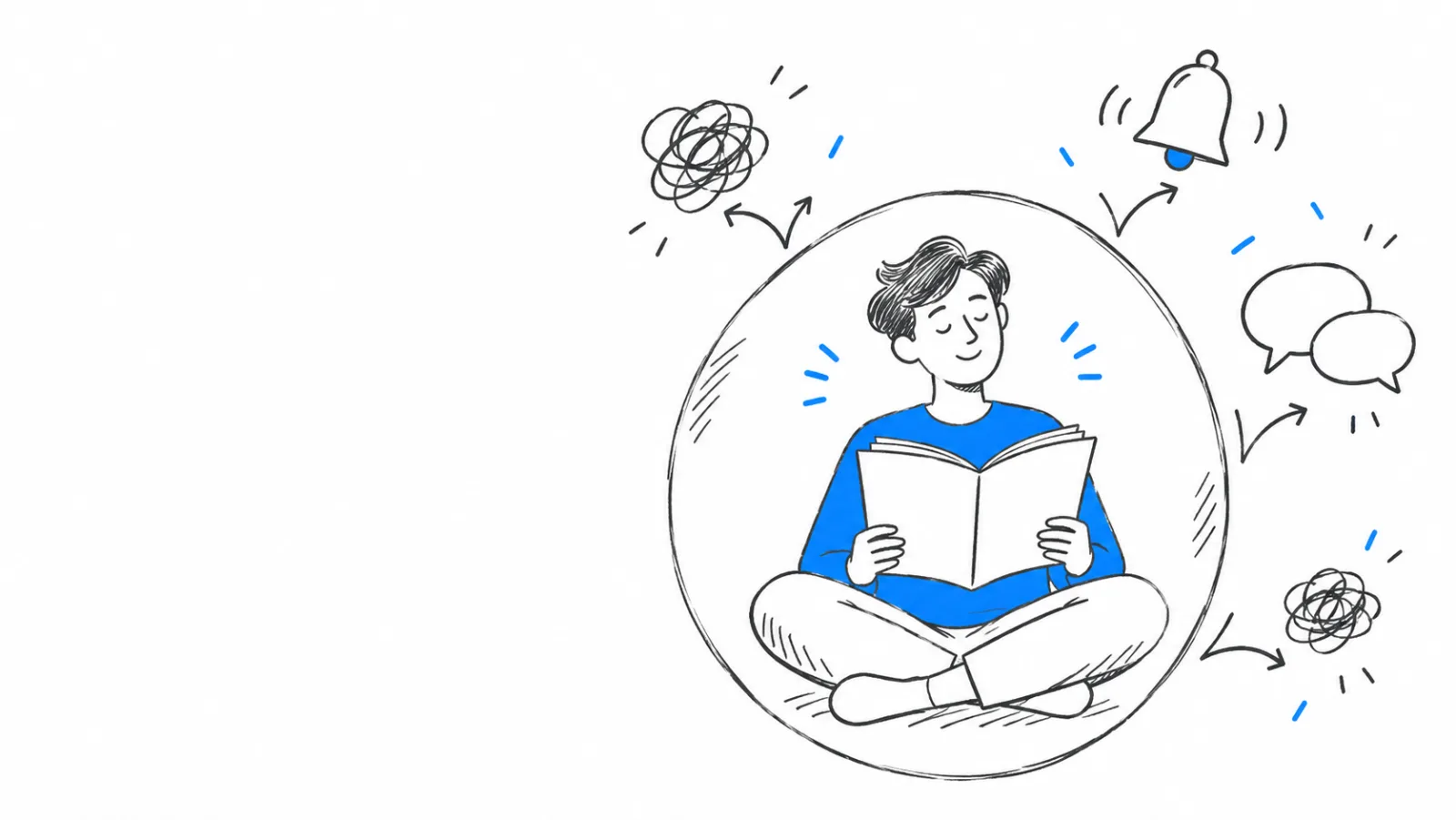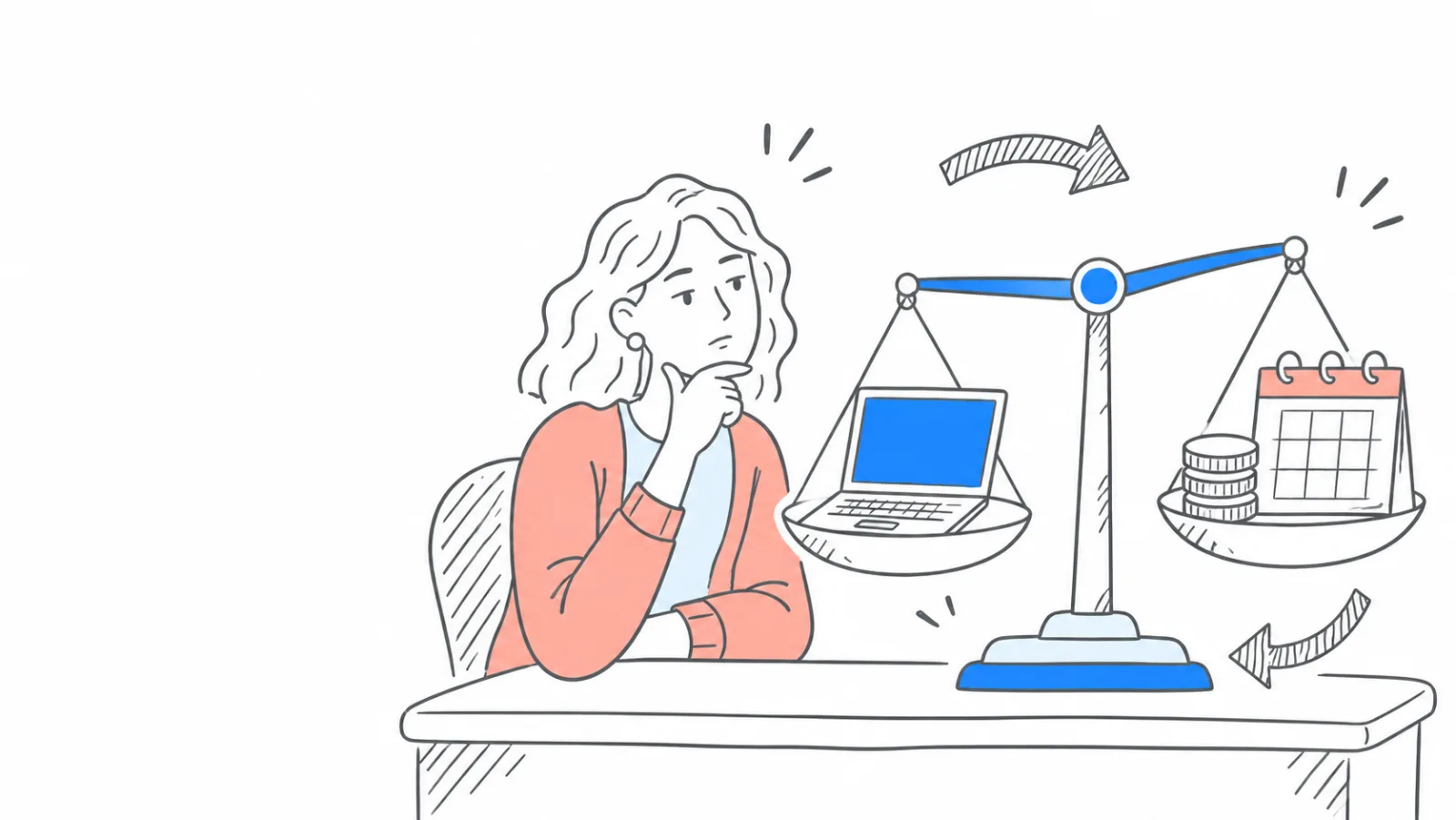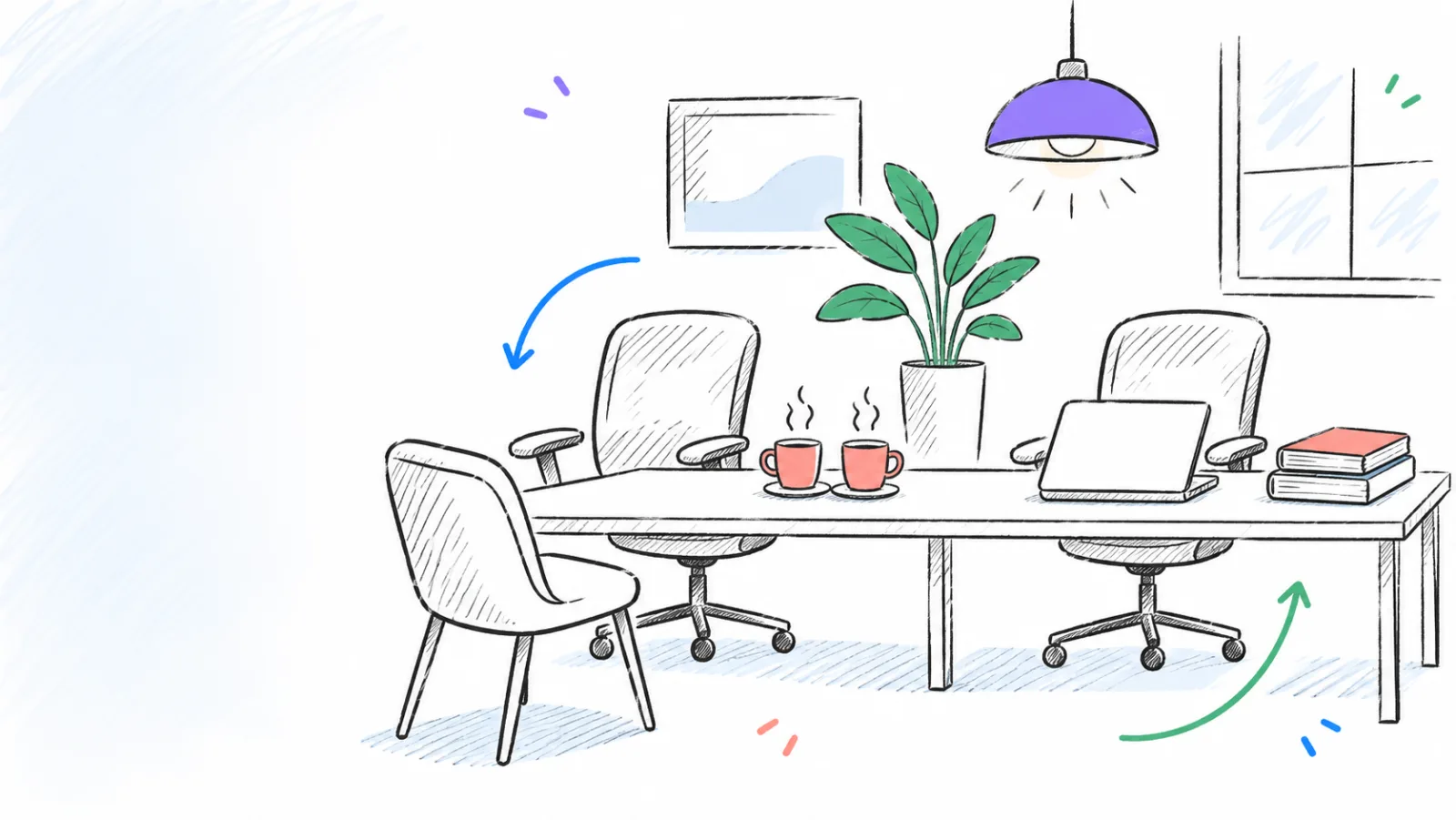

Careers for people with ADHD go best when the work matches the person’s interests and the conditions in which their attention works well. A systematic review of 79 studies concluded that “workers with ADHD can adapt and thrive in employment with the right person-environment fit, and accommodations and support”. In interviews with 125 young adults first diagnosed as children, “many subjects describe their symptoms as context-dependent”. Many said that some settings helped them focus or turned traits such as high energy into strengths. The settings they described most often involved stressful and challenging work, new tasks, busy places, hands-on work and work they found interesting for its own sake.
So this guide to jobs for people with ADHD starts from the evidence. It follows four steps: measure your interests, check the conditions of a job, look at how the job structures time, and plan the support you would want. Along the way it looks at the creativity claim, self-employment and the conditions that make work harder.
What research says about ADHD and work
The National Institute of Mental Health describes ADHD as “a persistent pattern of inattention and/or hyperactivity”. It is part of working life for many people. About 6.0% of U.S. adults, roughly 15.5 million people, said in a 2023 national survey that they currently had an ADHD diagnosis, and about half were diagnosed at 18 or later. A systematic review puts the share of workers with a diagnosis at about 4%, and a national survey published in 2005 that screened workers aged 18 to 44 found 4.2%.
The number moves with the definition. A global meta-analysis estimated that in 2020, 2.58% of adults had persistent ADHD with a childhood onset and 6.76% had symptomatic ADHD regardless of when it began. A self-reported diagnosis, a screen in a national survey and a symptom count each answer a slightly different question, which is why the figures below differ.
What happens at work? One study compared a community sample of 1,231 people with 134 adults with an ADHD diagnosis recruited from an outpatient clinic. It found work-related problems among community participants with ADHD symptoms and among the diagnosed group. People with ADHD reported problems “particularly in not meeting their own standards and perceived potential,” and less often in poor performance reviews or job loss. Symptoms, inattention most of all, were strongly linked to work problems, while scores on neuropsychological tests were “no meaningful predictor of functioning at work”. In this study, then, how attention played out in daily life said more about work than a lab score did.
Group averages are harder to read. A systematic review of six longitudinal studies found that people diagnosed in childhood “generally experience employment of lower quality compared with peers,” in income, education and occupational attainment, and it rated “the overall level of evidence” as poor. These are group averages, and a person’s own career can run very differently.
Five work conditions people with ADHD describe
People searching for the best jobs for people with ADHD usually find lists of job titles. The most useful study for this question looks at conditions of the work, which travel across titles. Lasky and colleagues interviewed 125 young adults at four North American sites in 2010 and 2011, all diagnosed with ADHD as children, about their jobs and studies. As adults, the authors write, people with ADHD “have significantly more latitude to control aspects of their day-to-day environments”. Many participants said that in some settings they felt better able to focus, and in others traits such as high energy worked in their favor.
The settings they described most often involved tasks that were “stressful and challenging, novel and required multitasking, busy and fast-paced, physically demanding or hands-on, and/or intrinsically interesting”. These are reports from 125 people. Treat them as prompts for your own reflection about past work or study that went well.
Stressful and challenging. Urgent problems, high stakes and decisions that cannot wait. If that describes work that suited you, the field Gyfted calls “Public Safety, Military & Emergency” is one to explore, and the EMT career quiz is one way to test your interest in a specific role.
Novel, with multitasking. New tasks and several threads running at once. Project-based work tends to bring fresh problems, and the “Creative, Design & Media” field is one place to look.
Busy and fast-paced. A steady stream of tasks with short cycles and little waiting. The “Hospitality, Personal Care & Services” field is one to explore, and the chef career quiz is one way to test your interest in a role like this.
Physically demanding or hands-on. Moving, building, fixing and using tools. Look at “Skilled Trades & Construction”, and try the electrician career quiz if wiring and repair work appeal to you.
Intrinsically interesting. Work you would choose for its own sake. This is where your interests come in, and the next section shows how to measure them.
A job title does not fix these conditions. The same role can be hectic in one workplace and quiet in another, so ask about the conditions in the specific job. Career quizzes by field group roles by area, so you can explore the fields that match a condition you work well in. Good jobs for people with ADHD, in this view, are the ones where your interests and your conditions meet.
The condition labels below come from the interview study. The field names come from Gyfted’s career quizzes page and are pointers for exploring, since the study reported conditions and named no fields.
| What it looks like at work | A career quiz field to explore | |
|---|---|---|
| Stressful and challenging | Urgent problems, high stakes, quick decisions | Public Safety, Military & Emergency |
| Novel, with multitasking | New tasks and several threads at once | Creative, Design & Media |
| Busy and fast-paced | A steady stream of tasks with short cycles | Hospitality, Personal Care & Services |
| Physically demanding or hands-on | Moving, building, fixing, using tools | Skilled Trades & Construction |
| Intrinsically interesting | Work you would choose for its own sake | The field that matches your top Holland types |
- What it looks like at work
- Stressful and challenging
- Urgent problems, high stakes, quick decisions
- Novel, with multitasking
- New tasks and several threads at once
- Busy and fast-paced
- A steady stream of tasks with short cycles
- Physically demanding or hands-on
- Moving, building, fixing, using tools
- Intrinsically interesting
- Work you would choose for its own sake
- A career quiz field to explore
- Stressful and challenging
- Public Safety, Military & Emergency
- Novel, with multitasking
- Creative, Design & Media
- Busy and fast-paced
- Hospitality, Personal Care & Services
- Physically demanding or hands-on
- Skilled Trades & Construction
- Intrinsically interesting
- The field that matches your top Holland types
Best careers for people with ADHD start with interests
The fifth condition, intrinsically interesting work, links the ADHD interviews to a large body of research on interests and work. A meta-analysis by Nye and colleagues pooled 60 studies and approximately 568 correlations and found that “interests are indeed related to performance and persistence in work and academic contexts”. The match between a person’s interests and the work environment, called congruence, predicted performance better than interest scores alone. In the authors’ words, “the fit between individuals and their environment was more predictive of performance than interest alone”.
That meta-analysis was about interests and performance in general, with no focus on ADHD. It gives an evidence-based first step for any career choice, which makes it a sound place to start here as well.
Holland’s theory sorts interests into six types. Gyfted’s Holland code test describes them this way:
- Realistic: “practical, hands-on, and mechanically inclined”
- Investigative: “analytical, intellectual, and curious individuals”
- Artistic: “creative, expressive, and imaginative individuals”
- Social: “empathetic, compassionate, and cooperative individuals”
- Enterprising: “ambitious, persuasive, and energetic individuals”
- Conventional: “detail-oriented, organized, and methodical individuals”
The Holland code career test “helps identify your career interests based on your personality,” using these six types. Its results describe interests alone, so they carry no information about attention and cannot screen for ADHD or any other condition.
From a measurement point of view, the two kinds of information complement each other. An interest score tells you what kind of work draws you. The five conditions tell you what the day should feel like. When both point to the same kind of work, you have a lead worth testing. For more on how personality and interests relate to career choice, see what is the best career path for your personality type.
| Step | What happens |
|---|---|
| Measure interests | Find your top two or three Holland types |
| Name your conditions | Which of the five helped you in past work or study |
| Check how time is run | Deadlines, handovers and who sets priorities |
| Plan support | Tools and accommodations you would ask for |
| Try it small | Shadow, volunteer or take a short contract first |
Is ADHD linked to creativity?
Many lists of the best jobs for ADHD lead with creative work, on the idea that ADHD comes with extra creativity. Hoogman and colleagues tested that idea in a review of 31 behavioral studies. The results are mixed, and they deserve a plain summary.
In most of the studies, people with high ADHD scores below the clinical threshold did better on divergent thinking tasks. People with a clinical diagnosis showed no such gain in most studies. So the advantage on divergent thinking showed up mainly in people whose scores sat below the clinical level. Creative abilities and achievements were common in both the clinical and the subclinical groups. The review saw no gain in convergent thinking among people with ADHD, and stimulant medication showed no overall harm to creativity.
What does that mean for a career? In the reviewed studies, creative achievement was common among people with ADHD, and the evidence for a built-in thinking advantage was weaker than the lists suggest. For choosing a job, that points back to interests. Choose creative work when your Artistic interest is high, and check it against the five conditions above, because creative jobs differ a lot in pace and structure.
An interest test shows how strongly creative work draws you. An Artistic score describes your interest in creative, expressive and imaginative work, and that interest is the part of the creativity question you can act on when you pick a job.
Self-employment and ADHD
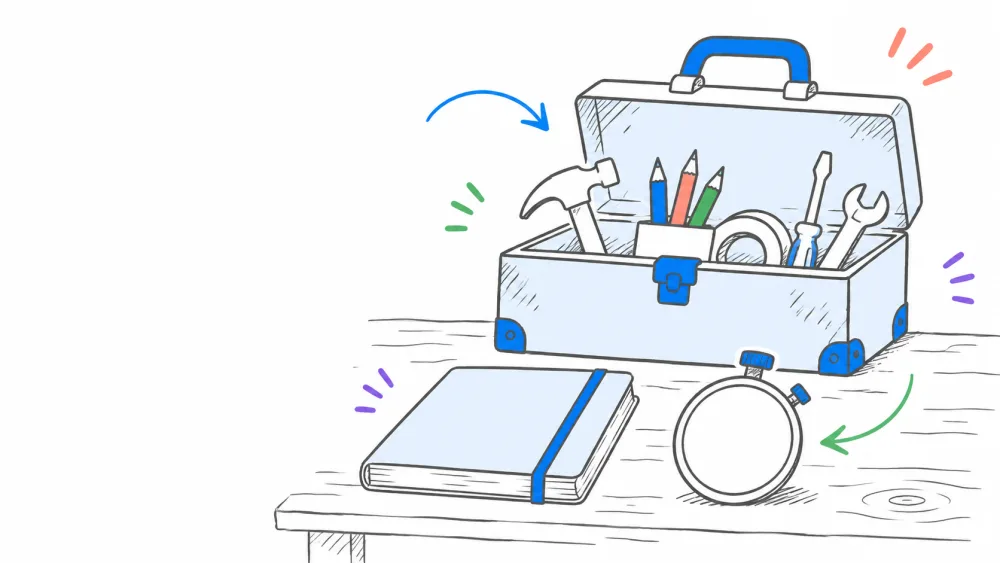
Running your own business is a frequent suggestion for people with ADHD. The research behind it is thinner than the suggestion. In a survey of 10,104 students in higher education, students who scored higher on ADHD-like behavior more often said they intended to start a business, and a greater taste for risk taking partly explained the link. The study measured intentions in students. It does not show whether they went on to found businesses or how those businesses did.
A later study looked at business owners whose ADHD symptoms fell below the clinical threshold. Its authors write that “how and why some people with ADHD symptoms run successful ventures, while other entrepreneurs fail to perform well, is still not well established”. In their analysis, performance came when these entrepreneurs “simultaneously experience passion for founding and developing”. Passion for building the company mattered alongside the symptoms themselves.
Self-employment also moves all of the structure onto you: no manager sets the deadlines, and every priority is yours to choose. That matters because time management was one of the factors most tied to work outcomes in the study discussed in the next section. If running your own business appeals, an entrepreneurial personality quiz is a structured way to check the interest before you test the idea. A side project or a short freelance contract can then show how the day-to-day structure suits you.
Worst careers for ADHD: where work gets harder
People who search for the worst careers for ADHD often expect a list of jobs. The research on this question measures conditions and outcomes, so this section works from those. Chan and Langberg studied 100 adults with ADHD aged 19 to 30, all working full-time. Participants reported on their symptoms, their executive functioning and five areas of work: income, written warnings, boredom at work, and satisfaction with coworkers and with supervisors.
After accounting for medication status, sex and age, “hyperactivity/impulsivity and time management were the most consistent predictors of outcomes”. People who reported more of either had lower pay, more written warnings, more boredom and less satisfaction with the people they worked with. The sample was small and cross-sectional, and the authors call for replication. The clinic study above also tied symptoms, inattention most of all, to work problems.
Put together, the strain sits in how a role structures time and attention. The study compared no jobs, so the points below follow from what it measured. Watch for roles where you set every deadline yourself, where priorities shift with no one to settle them, and where repetitive tasks fill the day. Boredom at work was one of the measured outcomes. This section names no job, because the same job can be organized in very different ways from one employer to the next.
Once you are in a role, focus habits help too. For techniques, see how to overcome distractions and focus on deep work. A work personality test reports nine work traits, including self-discipline and adaptability, so you can compare them with what a role demands.
Support at work: accommodations and disclosure
Support is the second half of the review’s conclusion: fit, plus “accommodations and support”. The same review notes that many challenges “can be remodeled into assets in a workplace environment that promotes flexible working practices and openness to neurodiversity”.
In the US, EEOC guidance on mental health conditions at work is direct about privacy: “In most situations, you can keep your condition private”. If you do share medical information, the employer “must keep the information confidential, even from co-workers”. The guidance lists examples of possible accommodations, including “altered break and work schedules,” “quiet office space or devices that create a quiet work environment” and “permission to work from home”.
The Job Accommodation Network (JAN), a service of the U.S. Department of Labor’s Office of Disability Employment Policy, keeps a page of accommodation ideas for ADHD. It also points out that “the ADA does not contain a definitive list of medical conditions that constitute disabilities”. The items below are JAN’s, lightly shortened.
Accommodations JAN lists for ADHD
- A quiet work space
- Noise cancellation or white noise
- Uninterrupted work time
- To-do lists
- Meetings to discuss expectations
- Assistance with prioritization
- Assistive technology (timers, apps, calendars)
- Structured breaks as a physical outlet
- Working from home
- A mentor
Several of these, such as to-do lists, timers and calendars, are habits you can set up on your own before you ask for anything. Others, such as a mentor or a regular meeting about expectations, depend on the employer. This section is general information. For a specific situation, contact JAN or an employment lawyer.
Questions to ask before you accept a job
A job description rarely tells you how the work feels from hour to hour. An interview is your chance to find out. These questions turn the five conditions into things you can ask, plus one about how time is run, which mattered in the research on work outcomes:
- How often do urgent situations come up, and how are they handled?
- How many projects run at once, and who sets priorities among them?
- What does a typical hour look like on a busy day?
- How much of the day is on your feet, with tools or away from a desk?
- Which tasks fill most of the week?
- Who sets priorities when two deadlines clash?
Write down the answers and compare them with the conditions you named for yourself. A role that scores well on your interests and on most of these questions is worth a closer look, through a trial day, shadowing or a short contract.
FAQ
These answers draw on the studies and guidance cited above.
What jobs are people with ADHD best at?
Research on ADHD and work points to fit between the person and the job. In one interview study, many young adults with ADHD said they focused better, or their traits helped, in work that was challenging, new, fast-paced, hands-on or interesting to them. Interest fit also predicts performance. Start with your interests, then find jobs with those conditions.
Can adults with ADHD work full-time?
Yes. A review of 79 studies concluded that workers with ADHD "can adapt and thrive in employment" when the job fits them and support is in place. One study recruited 100 adults with ADHD in full-time work. In another study, the work problems reported most often involved falling short of their own standards, and job loss was less common.
How do you keep a job with ADHD?
In one study of young adults with ADHD in full-time work, time management and hyperactivity/impulsivity were the factors most consistently tied to outcomes such as income and written warnings. Before you accept a job, ask how deadlines and priorities are set. Once in it, consider accommodations JAN lists, such as to-do lists, help with prioritization and uninterrupted work time.
Do I have to tell my employer I have ADHD?
EEOC guidance on mental health conditions says you usually do not have to share a health condition with your employer, and that an employer must keep medical information you share confidential, even from co-workers. Whether to disclose is your call, for example when asking for an accommodation. JAN or an employment lawyer can advise on a specific case.
Are there jobs people with ADHD should avoid?
The studies cited here measure work conditions and outcomes, and they point to conditions that can make work harder. In one study, time management predicted outcomes such as written warnings and boredom at work. Check how a role handles deadlines, priorities and repetitive tasks in any job you consider, since the same title can be organized very differently.
Sources
Show all 18 sources
- Hotte-Meunier, A., Sarraf, L., Bougeard, A., Bernier, F., Voyer, C., Deng, J., El Asmar, S., et al. (2024). Strengths and challenges to embrace attention-deficit/hyperactivity disorder in employment: A systematic review. Neurodiversity, 2. doi.org/10.1177/27546330241287655
- Lasky, A. K., Weisner, T. S., Jensen, P. S., Hinshaw, S. P., Hechtman, L., Arnold, L. E., Murray, D. W., and Swanson, J. M. (2016). ADHD in context: Young adults’ reports of the impact of occupational environment on the manifestation of ADHD. Social Science & Medicine, 161, 160-168. doi.org/10.1016/j.socscimed.2016.06.003
- National Institute of Mental Health (2024). ADHD in Adults: 4 Things to Know (NIH Publication No. 24-MH-3573). National Institutes of Health. nimh.nih.gov
- Staley, B. S., Robinson, L. R., Claussen, A. H., Katz, S. M., Danielson, M. L., Summers, A. D., Farr, S. L., Blumberg, S. J., and Tinker, S. C. (2024). Attention-Deficit/Hyperactivity Disorder Diagnosis, Treatment, and Telehealth Use in Adults: National Center for Health Statistics Rapid Surveys System, United States, October-November 2023. CDC, Morbidity and Mortality Weekly Report, 73(40), 890-895. doi.org/10.15585/mmwr.mm7340a1
- Kessler, R. C., Adler, L., Ames, M., Barkley, R. A., Birnbaum, H., Greenberg, P., Johnston, J. A., Spencer, T., and Ustün, T. B. (2005). The prevalence and effects of adult attention deficit/hyperactivity disorder on work performance in a nationally representative sample of workers. Journal of Occupational and Environmental Medicine, 47(6), 565-572. doi.org/10.1097/01.jom.0000166863.33541.39
- Song, P., Zha, M., Yang, Q., Zhang, Y., Li, X., and Rudan, I. (2021). The prevalence of adult attention-deficit hyperactivity disorder: A global systematic review and meta-analysis. Journal of Global Health, 11, 04009. doi.org/10.7189/jogh.11.04009
- Fuermaier, A. B. M., Tucha, L., Butzbach, M., Weisbrod, M., Aschenbrenner, S., and Tucha, O. (2021). ADHD at the workplace: ADHD symptoms, diagnostic status, and work-related functioning. Journal of Neural Transmission, 128(7), 1021-1031. doi.org/10.1007/s00702-021-02309-z
- Christiansen, M. S., Labriola, M., Kirkeskov, L., and Lund, T. (2021). The impact of childhood diagnosed ADHD versus controls without ADHD diagnoses on later labour market attachment: a systematic review of longitudinal studies. Child and Adolescent Psychiatry and Mental Health, 15(1), 34. doi.org/10.1186/s13034-021-00386-2
- Gyfted (2026). Career Quizzes by Field: Find the Job That Fits You. Gyfted. gyfted.me
- Nye, C. D., Su, R., Rounds, J., and Drasgow, F. (2012). Vocational Interests and Performance: A Quantitative Summary of Over 60 Years of Research. Perspectives on Psychological Science, 7(4), 384-403. doi.org/10.1177/1745691612449021
- Gyfted (2026). Holland Code Career Test. Gyfted. gyfted.me
- Hoogman, M., Stolte, M., Baas, M., and Kroesbergen, E. (2020). Creativity and ADHD: A review of behavioral studies, the effect of psychostimulants and neural underpinnings. Neuroscience & Biobehavioral Reviews, 119, 66-85. doi.org/10.1016/j.neubiorev.2020.09.029
- Verheul, I., Block, J., Burmeister-Lamp, K., and Thurik, R. (2015). ADHD-like behavior and entrepreneurial intentions. Small Business Economics. doi.org/10.1007/s11187-015-9642-4
- Hatak, I., Chang, M.-L., Harms, R., and Wiklund, J. (2020). ADHD symptoms, entrepreneurial passion, and entrepreneurial performance. Small Business Economics. doi.org/10.1007/s11187-020-00397-x
- Chan, E. S. M., and Langberg, J. M. (2024). Predicting Occupational Outcomes for Individuals with ADHD: The Role of Hyperactivity/Impulsivity and Executive Functioning. Journal of Occupational Rehabilitation. doi.org/10.1007/s10926-024-10259-y
- Gyfted (2026). Work personality test. Gyfted. gyfted.me
- U.S. Equal Employment Opportunity Commission (2016). Depression, PTSD, & Other Mental Health Conditions in the Workplace: Your Legal Rights. EEOC. eeoc.gov
- Job Accommodation Network (n.d., accessed November 2026). Attention Deficit/Hyperactivity Disorder (ADHD). U.S. Department of Labor, Office of Disability Employment Policy. askjan.org