Social intelligence is the ability to understand other people and social situations and to act well in them. Edward Thorndike, whose 1920 division of intelligence gave the idea its modern form, described it as the ability “to act wisely in human relations”. In daily life it looks like reading a room, remembering who is close to whom, working out why someone reacted the way they did, and choosing a fitting next move.
Psychologists have argued about the concept for a century, mostly over one question: can it be measured apart from general intelligence? This guide covers the definition and its history, the skills researchers split it into, everyday examples, how it compares with emotional intelligence and IQ, how it is measured, and how to get better at it.
Social intelligence definition: where the idea comes from
The term itself appears in Dewey (1909) and Lull (1911). The modern concept starts with Thorndike in 1920, who split intelligence into three facets: abstract intelligence for ideas, mechanical intelligence for concrete objects, and social intelligence for people. His social intelligence definition was “the ability to understand and manage men and women, boys and girls,” which he summed up as acting “wisely in human relations”.
| When | What | Detail |
|---|---|---|
| 1920 | Thorndike names three intelligences | Social intelligence sits alongside abstract and mechanical intelligence |
| 1927 | An early test | The George Washington test draws criticism at once |
| 1937 | Swamped by verbal ability | Thorndike and Stein find the test leans heavily on words and ideas |
| 1960 | Written off | Cronbach: still undefined and unmeasured |
| 1990 | Emotional intelligence | Salovey and Mayer define it as a subset of social intelligence |
| 2001 | New measures | The Tromsø scale and the revised Eyes test |
| 2013 | Separate abilities | The Magdeburg test finds distinct facets |
Source: Kihlstrom and Cantor, 2020; Salovey and Mayer, 1990; Silvera et al., 2001; Baron-Cohen et al., 2001
Later writers widened the idea. Moss and Hunt (1927) called it the “ability to get along with others,” and Vernon (1933) added “knowledge of social matters” and “insight into the temporary moods or underlying personality traits of strangers”. Some definitions drifted toward manipulation: Salovey and Mayer quote Weinstein’s view that it “boils down to the ability to manipulate the responses of others”.
Measurement was the sticking point from the start. Thorndike warned that social intelligence “eludes the formal standardized conditions of the testing laboratory”. Critics objected to the George Washington Social Intelligence Test of 1927 almost at once, because its scores tracked abstract intelligence fairly closely. In 1937 Thorndike and Stein judged it “so heavily loaded with ability to work with words and ideas” that social differences were “swamped”. Wechsler (1958) called social intelligence “just general intelligence applied to social situations”. By 1960 Cronbach concluded that “social intelligence remains undefined and unmeasured”.
In 1990, Salovey and Mayer defined emotional intelligence as a subset of social intelligence, and new measures followed over the next 23 years: the Tromsø Social Intelligence Scale and a revised Eyes test in 2001, and the Magdeburg Test of Social Intelligence in 2013. The social intelligence meaning that emerges from this work is a family of related abilities, which the Magdeburg results describe as “multidimensional in nature”.
Social intelligence skills: what it is made of
Researchers break social intelligence down from two directions: self-description, and tasks with right and wrong answers.
Three facets people report about themselves
The Tromsø Social Intelligence Scale began with a study of how professional psychologists interpret social intelligence. Its aim was a “consensually agreed-upon definition” of the construct. Testing a large item pool produced a 21-item scale with three factors, and a third study confirmed it was stable. The three factors are social information processing, social skills and social awareness, each scored from seven items on a 7-point scale. A typical item for the first factor reads “I can predict other peoples’ behavior.” Social skills covers how easily you fit into social settings, and social awareness covers how readily you understand what others do and why.
Five abilities measured with tasks
One performance model, by Weis and Süß, describes five abilities, as summarized by Kihlstrom and Cantor:
| Ability | What it means | Everyday sign |
|---|---|---|
| Social perception | “the ability to quickly perceive social information in complex settings” | Sensing tension as you walk into a meeting |
| Social memory | “the ability to store and recall social information” | Recalling names, past talks and who gets on with whom |
| Social understanding | “the ability to understand social stimuli presented in a situational context” | Working out why a remark landed badly |
| Social flexibility | “the ability to produce many and diverse solutions in a social situation” | Having a second way to ask when the first fails |
| Social knowledge | “the individual’s fund of knowledge about the social world” | Knowing what a setting expects of you |
The Magdeburg Test of Social Intelligence measures the first three. Social memory and social understanding held up as distinct abilities, and scores on all three were unrelated to the Big Five personality traits. Research on judging strangers’ personalities shows a similar split. In a meta-analysis of five studies, accuracy for one trait barely predicted accuracy for another, and the authors conclude that different ways of measuring it “represent distinct abilities”.
Popular writers cover the same ground with other labels. Daniel Goleman groups social intelligence under two headings, social facility and social awareness. Social awareness covers sensing what others are thinking and feeling, along with the ability “to understand their feelings and thoughts”. That overlaps with what an empathy test asks about. Howard Gardner’s interpersonal intelligence, “the ability to notice and make distinctions among other individuals,” sits close by.
Social intelligence examples
The five abilities give a practical way to sort social intelligence examples. The scenarios below are everyday illustrations, each tied to one facet from the research model.
- Perception. In a team meeting, a colleague says the plan is “fine,” while their face and posture say otherwise. You catch the mismatch in the moment.
- Memory. You join a project and remember that two people on it already clashed over a similar decision last spring, so you raise the topic with care.
- Understanding. A friend goes quiet after a joke at dinner. You work out that it touched on something they told you about weeks ago.
- Flexibility. You ask a busy manager for help in a short message and get no reply. You try again in person, with a smaller and clearer request.
- Knowledge. You know that a joke that suits a farewell party will land badly at a funeral, and you hold it back.
Most examples of social intelligence mix several facets at once. Calming a tense negotiation, for instance, takes perception to notice the tension, understanding to see its cause, and flexibility to find a new way to put the offer. That step, choosing how to say something once you know what the other person needs, is where your communication styles come in.
Laypeople carry a similar picture in their heads. When Sternberg and colleagues (1981) asked ordinary people to describe intelligent behavior, a factor of “social competence” emerged. Its typical behaviors included “accepts others for what they are,” “admits mistakes,” “thinks before speaking and doing,” “does not make snap judgments” and “is sensitive to other people’s needs and desires”. That list is a fair picture of what makes someone socially intelligent in the eyes of the people around them.
Social intelligence vs emotional intelligence
The short answer on social intelligence vs emotional intelligence comes from the psychologists who introduced the second term to research. Salovey and Mayer (1990) defined emotional intelligence as “the subset of social intelligence that involves the ability to monitor one’s own and others’ feelings and emotions, to discriminate among them and to use this information to guide one’s thinking and actions”. Three years later they called it “a type of social intelligence”.
Emotional intelligence today covers four abilities: perceiving emotions, using them to think and solve problems, understanding them, and managing them in yourself and others. The four, and how to build each, are covered in our guide to emotional intelligence. The two concepts overlap where feelings carry social information. Kihlstrom and Cantor note that decoding nonverbal expressions of emotion “is an important aspect of the ability to ‘read’ social situations in general”. You could call that shared ground social emotional intelligence.
| Social intelligence | Emotional intelligence | |
|---|---|---|
| Core ability | Understanding people and social situations, and acting well in them | Perceiving, using, understanding and managing emotions |
| Points at | Other people and the setting, and by extension yourself | Feelings, your own and other people's |
| How they relate | The wider family of abilities | Defined by its authors as a subset of social intelligence |
| Typical parts | Social perception, memory, understanding, flexibility, knowledge | Perceive, use, understand and manage emotions |
| Where it stands alone | Social knowledge with little emotion, such as roles and norms | Emotions with nothing social, such as handling your own fear of snakes |
- Social intelligence
- Core ability
- Understanding people and social situations, and acting well in them
- Points at
- Other people and the setting, and by extension yourself
- How they relate
- The wider family of abilities
- Typical parts
- Social perception, memory, understanding, flexibility, knowledge
- Where it stands alone
- Social knowledge with little emotion, such as roles and norms
- Emotional intelligence
- Core ability
- Perceiving, using, understanding and managing emotions
- Points at
- Feelings, your own and other people's
- How they relate
- Defined by its authors as a subset of social intelligence
- Typical parts
- Perceive, use, understand and manage emotions
- Where it stands alone
- Emotions with nothing social, such as handling your own fear of snakes
Each also covers ground the other leaves out. Mayer and Salovey point out that social intelligence “can be applied inward” to understanding and managing oneself. Kihlstrom and Cantor give an example from the other side: “There is nothing particularly social about snake phobia,” while many parts of social cognition involve little or no emotion. Knowing who reports to whom, or how formal to be in a first email to a client, is social knowledge with hardly any feeling in it.
Mayer and Salovey argued that emotional intelligence may separate from general intelligence more cleanly than social intelligence did. Kihlstrom and Cantor are more cautious. They see “little reason to think that emotional intelligence is a clearer concept than social intelligence or any easier to measure”. Put simply, emotional intelligence is the feelings branch of a larger tree, and both are hard to pin down with a single score.
Is social intelligence separate from IQ?
A common question is whether high-IQ people struggle socially. The evidence points to two related abilities with a modest link between them.
The George Washington test could not settle the question, because its scores leaned so heavily on verbal ability. Later, Marlowe (1986) found social intelligence scales “essentially unrelated to verbal and abstract intelligence”. Kihlstrom and Cantor point out that this independence may be “at least partially an artifact of method variance,” since Marlowe’s social measures were self-reports and his intelligence measures were performance tests.
When both sides use performance tasks, the picture is mixed. In a study pairing the Magdeburg test with the Berlin Intelligence Structure Test, social perception and social memory correlated with academic intelligence, while social understanding did not. Kihlstrom and Cantor conclude that the line between social and general intelligence “remains problematic”.
The biggest dataset in this guide covers one facet, reading emotions from nonverbal cues. Schlegel and colleagues (2020) pooled 471 effect sizes from 133 samples and found a mean correlation of r = .19 between emotion recognition and intelligence. School results such as SAT scores showed no link with it. The link with intelligence was stronger for tests that combine face, voice and body cues, and for tests that were more reliable or covered a wider range of emotions. Their verdict is that emotion recognition is “distinct from, yet related to, intelligence”.
In plain terms, a high IQ goes with a small edge in reading emotions and guarantees nothing. With a correlation that small, many people with average IQ scores read emotions well, and many high scorers do not.
How psychologists measure social intelligence
There are two main answers to how to measure social intelligence: ask people about themselves, or give them tasks with correct answers.
Self-report scales
The Tromsø scale described above asks you to rate statements about yourself from 1 (“describes me extremely poorly”) to 7 (“describes me extremely well”). Questionnaires like this have become a common choice in research. They are quick to complete. Their limit follows from the method point above: they record your view of your own skill. Kihlstrom and Cantor caution that findings based on self-reports still need checking with performance tasks.
Performance tasks: Reading the Mind in the Eyes
The best-known task shows 36 photos of the eye region of a face, and you pick which of four words best describes the person’s intention. Baron-Cohen and colleagues first published it in 1997 “as a measure of adult ‘mentalising’” and revised it in 2001 to fix “several psychometric problems,” giving it “improved power to detect subtle individual differences in social sensitivity”.
Kittel, Olderbak and Wilhelm (2022) call it “the most popular adult measure of individual differences in theory of mind”. Their meta-analysis of 61 studies and 8,611 people found acceptable internal consistency (α = .73). Scores correlated r = .33 with emotion perception, r = .29 with other theory-of-mind measures, r = .25 with vocabulary, r = .14 with cognitive empathy and r = .13 with affective empathy. They concluded that the test works “rather as emotion perception measure than as theory of mind measure”.
Olderbak and colleagues (2015) are harsher. In their samples “the complete test is not homogenous and has poor internal consistency”. They note that people with stronger verbal skills tend to score higher, and they recommend a 10-item short form instead. The evidence on reliability is mixed, and both teams agree that vocabulary plays a part.
What a score can and cannot tell you
A score on the original Eyes test shows how well you name emotions and intentions from the eye region under test conditions, compared with other people who took it. It says much less about social memory, flexibility or social knowledge. A limited vocabulary can pull a score down, because each answer is a word you have to know. A single social intelligence quotient, like an IQ, would imply one ability, and the research above points to several.
Gyfted’s social intelligence test is “inspired by Simon Baron-Cohen’s Reading the Mind in the Eyes Test” and gives an instant score with a comparison to other test takers. The research above describes the original Eyes test, and its findings on reliability and validity belong to that test alone. Read a result from any online version as a snapshot of one facet, and set it beside how your conversations actually go.
Why social intelligence matters
Why is social intelligence important? One well-known answer comes from research on groups. Woolley and colleagues (2010) studied 699 people working in groups of two to five on a wide range of tasks. They found a general “collective intelligence” factor that explained group performance across tasks.
That factor was “not strongly correlated with the average or maximum individual intelligence of group members”. It was linked to the members’ average social sensitivity, to how evenly people took turns in conversation, and to the proportion of women in the group. A published comment on the study appeared in 2017, so read it as one well-known result that others have since examined. The idea it suggests is intuitive: groups do better when members pick up on each other and everyone gets a say.
At the individual level, Schlegel and colleagues describe emotion recognition ability as having “many positive correlates”. It is also the facet with the largest dataset in this guide, and the one the training studies in the next section set out to improve.
The well-being side of social life, how connected and supported you feel, has its own guide: see what it means to have positive social health.
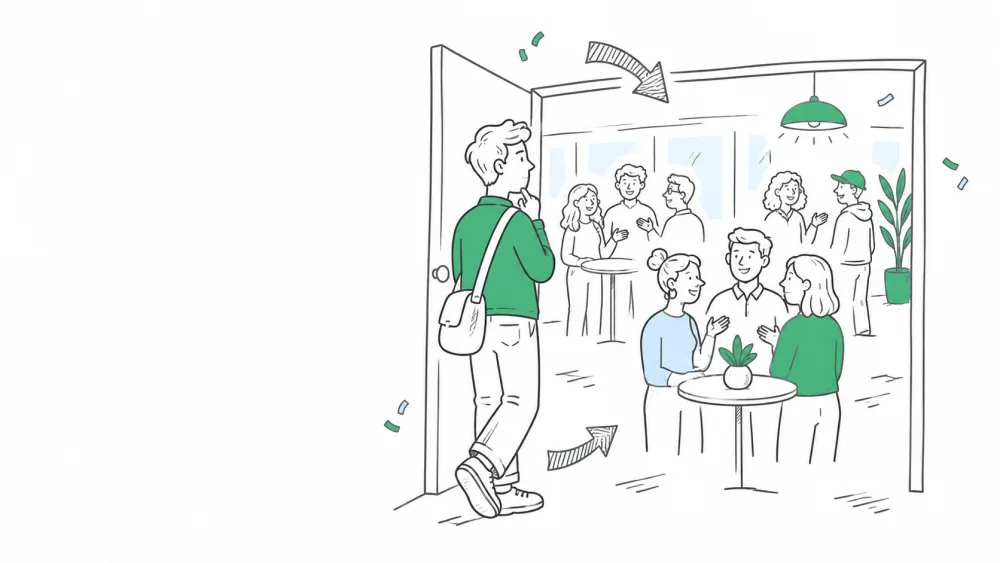
How to improve social intelligence
The best evidence on how to improve social intelligence comes from training studies on one facet, emotion recognition. Döllinger and colleagues (2021) randomized 67 participants to one of two training programs or an active control task. Each person trained once a week, with a brief computer program, for three weeks. Both training groups improved on the skill they practiced, and the authors describe the pre-post effects as large.
The gains stayed narrow. Participants “only improved significantly for the specific facet” they had trained, and on recognizing patients’ emotion cues, the training groups did no better than the control group. People who started with lower scores improved the most.
Long professional training carries no guarantee either. One study followed trainee psychotherapists through 1.5 years of education alongside a control group. Over that time the control group got better at reading emotion across face, voice and body, while the trainees stayed level. The authors conclude that clinical training does “not always” raise emotion recognition beyond what time or other factors would bring.
The practical reading: pick one facet, practice it on purpose, and get feedback on whether you read the situation correctly. The habits below carry that evidence into daily life; the studies themselves tested lab training.
Habits for building social intelligence
- Work on one skill at a time, such as reading faces or remembering details people share
- Check your read with a question, such as asking a colleague whether they felt unsure about the plan
- Ask someone you trust for feedback on a real conversation
- Learn the norms of a new team or setting before acting on them
- Try a second approach when the first one falls flat
- Replay a hard conversation afterward and note the cues you missed
Each habit builds in a way to check your read. Guessing what someone feels without ever checking gives you nothing to learn from. If you want a starting point for the emotional side, try the emotional type quiz.
Frequently asked questions
The answers below draw on the sources cited above.
What is a socially intelligent person?
A socially intelligent person reads people and situations accurately and adjusts what they do in response. When psychologists asked laypeople to describe intelligent behavior, the social side included accepting others for what they are, admitting mistakes, avoiding snap judgments and being sensitive to other people's needs. Both halves count: reading people well and acting well on that read.
Do people with a high IQ struggle socially?
The research on emotion reading points the other way. A meta-analysis of 133 samples found that the ability to recognize emotions and general intelligence correlate at about r = .19. That is a real but small positive link: higher IQ goes with slightly better emotion reading on average, and individuals vary widely in both directions.
Can social intelligence be learned?
Specific parts of it can improve with targeted practice. In one randomized trial, three weekly sessions of brief computer training produced large gains in the type of emotion recognition people practiced. The gains stayed with the trained skill, so broad improvement probably means practicing in several kinds of situations and checking your read along the way.
Is social intelligence a character strength?
The VIA classification of character strengths places social intelligence under the virtue of humanity. It describes the strength in plain terms: knowing "what makes other people tick." That framing treats it as a trait to recognize and use, while the research in this guide measures it as a set of separate abilities.
Sources
Show all 14 sources
- Kihlstrom, J. F., and Cantor, N. (2020). Social intelligence. In R. J. Sternberg (Ed.), The Cambridge Handbook of Intelligence (2nd ed.). Cambridge University Press. ocf.berkeley.edu
- Salovey, P., and Mayer, J. D. (1990). Emotional intelligence. Imagination, Cognition and Personality. center.uoregon.edu
- Mayer, J. D., and Salovey, P. (1993). The intelligence of emotional intelligence. Intelligence. eclass.hmu.gr
- Silvera, D. H., Martinussen, M., and Dahl, T. I. (2001). The Tromsø Social Intelligence Scale, a self-report measure of social intelligence. Scandinavian Journal of Psychology. pubmed.ncbi.nlm.nih.gov
- PsyToolkit (n.d.). Tromsø Social Intelligence Scale (TSIS). PsyToolkit survey library. psytoolkit.org
- Hall, J. A., Back, M. D., Nestler, S., Frauendorfer, D., Schmid Mast, M., and Ruben, M. A. (2018). How do different ways of measuring individual differences in zero-acquaintance personality judgment accuracy correlate with each other? Journal of Personality. pubmed.ncbi.nlm.nih.gov
- Schlegel, K., Palese, T., Schmid Mast, M., Rammsayer, T. H., Hall, J. A., and Murphy, N. A. (2020). A meta-analysis of the relationship between emotion recognition ability and intelligence. Cognition and Emotion. pubmed.ncbi.nlm.nih.gov
- Baron-Cohen, S., Wheelwright, S., Hill, J., Raste, Y., and Plumb, I. (2001). The “Reading the Mind in the Eyes” Test revised version. Journal of Child Psychology and Psychiatry. pubmed.ncbi.nlm.nih.gov
- Olderbak, S., Wilhelm, O., Olaru, G., Geiger, M., Brenneman, M. W., and Roberts, R. D. (2015). A psychometric analysis of the Reading the Mind in the Eyes Test: Toward a brief form for research and applied settings. Frontiers in Psychology. pmc.ncbi.nlm.nih.gov
- Kittel, A. F. D., Olderbak, S., and Wilhelm, O. (2022). Sty in the mind’s eye: A meta-analytic investigation of the nomological network and internal consistency of the “Reading the Mind in the Eyes” Test. Assessment. pubmed.ncbi.nlm.nih.gov
- Woolley, A. W., Chabris, C. F., Pentland, A., Hashmi, N., and Malone, T. W. (2010). Evidence for a collective intelligence factor in the performance of human groups. Science. pubmed.ncbi.nlm.nih.gov
- Döllinger, L., Laukka, P., Högman, L. B., Bänziger, T., Makower, I., Fischer, H., and Hau, S. (2021). Training emotion recognition accuracy: Results for multimodal expressions and facial micro expressions. Frontiers in Psychology. pubmed.ncbi.nlm.nih.gov
- Döllinger, L., Letellier, I., Högman, L., Laukka, P., Fischer, H., and Hau, S. (2023). Trainee psychotherapists’ emotion recognition accuracy during 1.5 years of psychotherapy education compared to a control group. PeerJ. pubmed.ncbi.nlm.nih.gov
- VIA Institute on Character (n.d.). Social intelligence character strength. VIA Institute on Character. viacharacter.org