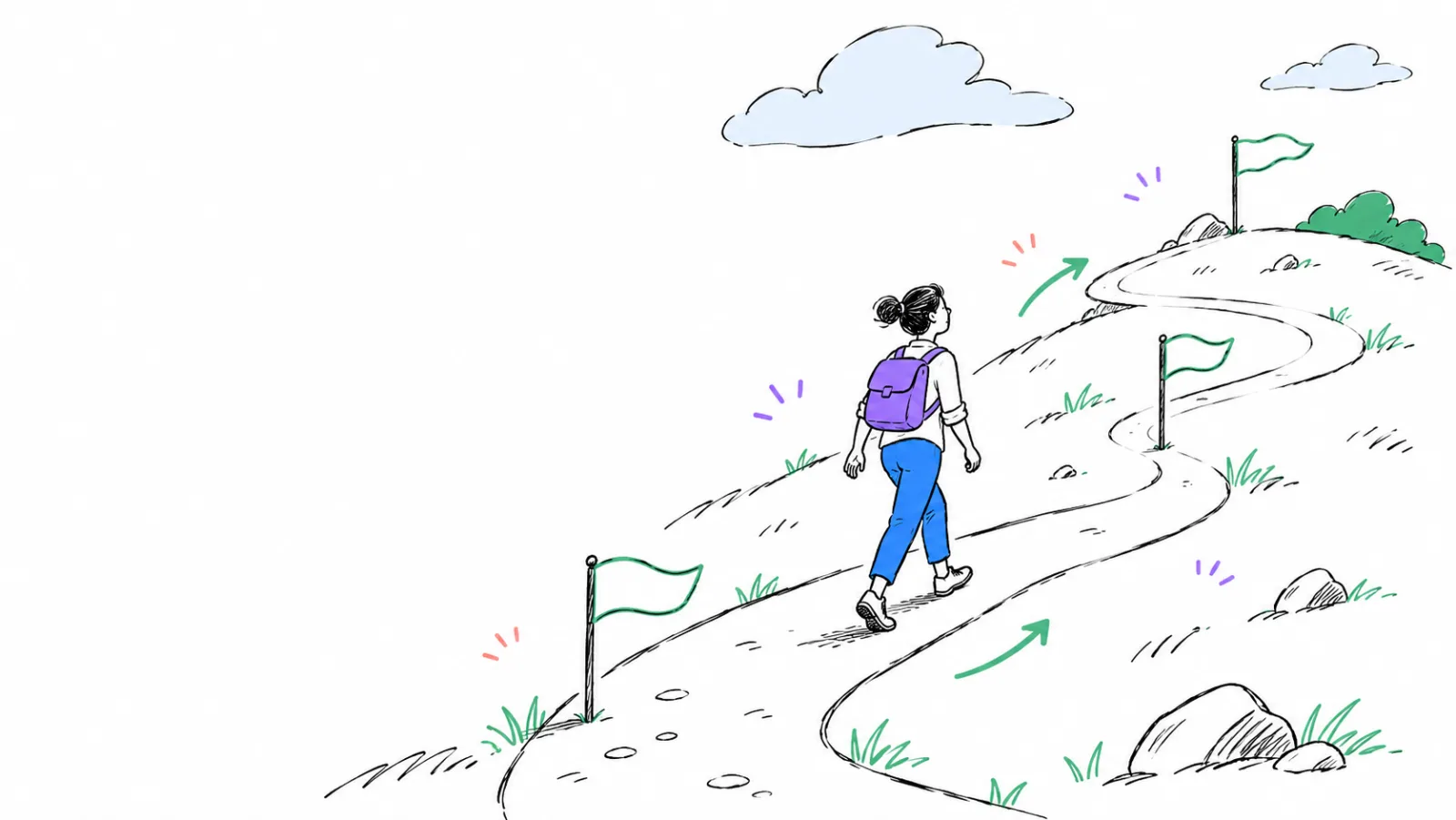
Character strengths are positive traits that people value as morally good, such as honesty, kindness, curiosity and perseverance, and that show in how you think, feel and act. The best-known list, the VIA Classification of Character Strengths and Virtues by Christopher Peterson and Martin Seligman (2004), names 24 character strengths grouped under six virtues: wisdom, courage, humanity, justice, temperance and transcendence.
Fiction writers use the phrase too, for the good qualities they give a hero. This guide is about the psychology sense. It covers the full list with examples, which strengths people rate highest in themselves, which ones go with life satisfaction, how the strengths are measured, and what research says about putting your top strengths to use.
What are character strengths?
Peterson and Seligman described character strengths through a set of typical features. A strength contributes to a person’s fulfillment, it is valued morally, it shows in what you think, feel and do, and you can point to people who embody it.
To build the classification, the team reviewed classic writings on virtue from Confucian, Taoist, Buddhist, Hindu, classical Greek, Judeo-Christian and Muslim traditions, and identified six virtues thought to be shared across them. McGrath reports that the strengths themselves took three years to settle, with input from over 50 scholars and clinicians, older catalogs of virtues, and books and media. The result, published in 2004 as Character Strengths and Virtues, places 24 strengths under six broader virtues.
VIA first stood for Values in Action. McGrath calls it an “orphaned acronym” that is now tied to the VIA Institute on Character. The VIA character strengths list is published by the VIA Institute on Character, which also runs the VIA Survey. The Institute frames the strengths as core traits, valued on moral grounds, that describe a person at their best.
The list of 24 character strengths
Here is the list of character strengths in the VIA Classification, grouped by virtue, with the names the VIA Institute uses on its current character strengths list. The plain descriptions and the character strengths examples are our own. Older research papers use a few different names: modesty for humility, religiousness for spirituality, and appreciation of beauty for appreciation of beauty and excellence.
| Strength | Virtue | In plain words | Example |
|---|---|---|---|
| Creativity | Wisdom | Finding new, useful ways to do things | Redesigning a clumsy shared spreadsheet |
| Curiosity | Wisdom | Wanting to know more and asking questions | Reading up on a coworker’s field after a meeting |
| Judgment | Wisdom | Thinking a question through from all sides | Hearing out the other argument before you decide |
| Love of learning | Wisdom | Enjoying getting better at a subject or skill | Taking an evening class for the pleasure of it |
| Perspective | Wisdom | Seeing the bigger picture and giving sound advice | Helping a friend weigh a job offer calmly |
| Bravery | Courage | Doing what is right despite fear or pushback | Raising a safety problem in a team meeting |
| Honesty | Courage | Telling the truth and being genuine | Admitting a missed deadline before anyone asks |
| Perseverance | Courage | Finishing what you start despite obstacles | Sticking with a hard course to the final exam |
| Zest | Courage | Meeting life with energy and enthusiasm | Bringing real energy to a Monday kickoff |
| Kindness | Humanity | Doing good for others unprompted | Driving a neighbor to an appointment |
| Love | Humanity | Valuing close bonds, giving and receiving care | Keeping a weekly call with a parent |
| Social intelligence | Humanity | Reading what others feel and want | Noticing that a quiet colleague wants to speak |
| Fairness | Justice | Holding everyone to the same standard | Giving credit to whoever did the work |
| Leadership | Justice | Organizing a group and keeping it together | Planning a group trip so everyone gets a say |
| Teamwork | Justice | Doing your share for the group | Covering a shift for a teammate |
| Forgiveness | Temperance | Letting go of grudges and giving second chances | Accepting an apology and moving on |
| Humility | Temperance | Not needing the spotlight | Crediting the whole team in a launch email |
| Prudence | Temperance | Thinking about consequences before acting | Reading a contract before you sign it |
| Self-regulation | Temperance | Managing impulses, moods and habits | Waiting a day before answering an angry email |
| Appreciation of beauty and excellence | Transcendence | Noticing beauty and skill around you | Stopping to watch a skilled carpenter at work |
| Gratitude | Transcendence | Noticing the good and saying thanks | Writing a thank-you note to a mentor |
| Hope | Transcendence | Expecting good things and working toward them | Mapping the next steps after a setback |
| Humor | Transcendence | Enjoying laughter and lightening the mood | Easing a tense meeting with a well-timed joke |
| Spirituality | Transcendence | A sense of meaning and purpose beyond yourself | Keeping quiet time for reflection or faith |
Wisdom: creativity, curiosity, judgment, love of learning, perspective
At home, curiosity is the person who asks the tour guide one more question, and love of learning is finishing a course nobody required. At work, creativity shows when someone turns a slow process into three simple steps. Judgment shows when a manager asks for the case against a plan before approving it, and perspective when a senior colleague helps a new hire see which problems matter.
Courage: bravery, honesty, perseverance, zest
Bravery can mean telling a friend a hard truth, and zest is the neighbor who turns a rainy weekend into a project. At work, honesty is the project lead who reports a slipping deadline early, and perseverance is the analyst who keeps testing explanations for an odd number until the real cause turns up.
Humanity: kindness, love, social intelligence
Love shows in the friend who remembers your hard week and checks in, and kindness in a stranger who helps carry a stroller up the subway stairs. At work, kindness can be onboarding a new teammate properly. Social intelligence, reading what others feel and want, is one of the three humanity strengths. It overlaps with the skills in our guide to emotional intelligence and its components. To look at it on its own, try Gyfted’s social intelligence test.
Justice: fairness, leadership, teamwork
Fairness is a parent who applies the same bedtime rule to every child. Leadership gets a neighborhood cleanup organized, with jobs assigned and snacks covered. At work, teamwork is the colleague who takes the unglamorous task because the group needs it done, and leadership is the manager who keeps a stressed team on one goal while every member is heard.
Temperance: forgiveness, humility, prudence, self-regulation
Forgiveness lets a sibling relationship survive an old argument, and prudence is checking the route before a long drive. At work, self-regulation is the employee who feels a flash of anger at a sharp comment and answers calmly the next morning, and humility is the expert who says “let me check” in front of a client.
Transcendence: appreciation of beauty and excellence, gratitude, hope, humor, spirituality
Appreciation of beauty and excellence is pausing on a walk to watch the light change, or admiring a teammate’s elegant code. Gratitude is a thank-you message after a referral, and hope keeps a job seeker applying after a run of rejections. Humor turns an awkward meeting into a shared laugh. Spirituality can be religious faith or a broader sense of purpose.
Which character strengths are most common?
One large data set on this question comes from Robert McGrath, who analyzed 1,063,921 adults who took the VIA Inventory of Strengths online from 2002 to 2012. He reported on 75 nations with 150 or more respondents each, and the strengths people endorsed were much alike from culture to culture.
In the US sample, the five most endorsed strengths, from the top, were honesty, fairness, kindness, judgment and curiosity. For the other 74 countries taken together, the top five were the same strengths in a different order, with fairness first. Fairness made the top five in all 75 countries.
| Rank | Item | Note |
|---|---|---|
| 1 | Honesty | |
| 2 | Fairness | Top five in every country studied |
| 3 | Kindness | |
| 4 | Judgment | |
| 5 | Curiosity |
Source: McGrath (2015), VIA-IS online sample
The bottom of the ranking was just as stable. For both the US and the other 74 countries, the five lowest strengths were self-regulation at the very bottom, then modesty, prudence, spirituality and zest. An earlier study of 54 nations by Park, Peterson and Seligman pointed the same way: the rank order of strengths in the US correlated .73 to .99 with the rank order in each other country, and .78 on average.
Two limits matter when you read these rankings. First, the people in the data chose to take an online survey, and McGrath himself writes that in many countries they “probably represent a biased sample”. Second, the VIA-IS is a self-report instrument, so the ranking shows how people describe themselves. How often each strength shows in behavior is a separate question.
Which strengths go with life satisfaction?
Peterson, Ruch, Beermann, Park and Seligman (2007) asked 12,439 US adults to rate their character strengths and life satisfaction online, and 445 Swiss adults to answer German paper versions. Love, hope, curiosity and zest showed some of the closest ties to life satisfaction in both countries. Gratitude also stood out in the US data, perseverance in the Swiss data.
In the US data, zest and hope each correlated .54 with life satisfaction, love .47 and gratitude .45. The strengths people rate highest in themselves did less well: fairness correlated .17 with life satisfaction and honesty .25, while modesty, one of the least endorsed strengths, correlated .06. Every one of the 24 strengths correlated positively with life satisfaction in that sample.
The strengths people most often claim differ from the strengths that go with a satisfied life. Honesty and fairness lead the self-ratings. Zest, hope, love and gratitude lead the link with life satisfaction.
Read these figures as associations. The data come from one survey at one point in time and rely on self-report, so they cannot show that zest raises life satisfaction. The link could run in either direction, or both scores could reflect something else.
Character strengths vs personality traits and values
Character strengths are often mixed up with personality traits and personal values. The table shows where the three differ.
| Character strengths | Personality traits | Personal values | |
|---|---|---|---|
| What it describes | Positive qualities valued as morally good | Broad patterns of thinking, feeling and acting | What matters to you and motivates choices |
| Moral judgment | Built in: each strength is valued | Neutral: traits are described without praise | Personal: you rank what is important |
| Main model | VIA Classification, 24 strengths | Five-Factor Model (Big Five) | Schwartz's model of values |
| Typical measure | VIA-IS, 240 items; VIA-IS-P, 96 items | NEO-PI-R and other Big Five inventories | Portrait Values Questionnaire (PVQ) |
| Overlap | Strong overlap with the Big Five | Rarely redundant with strengths | A separate question from both |
- Character strengths
- What it describes
- Positive qualities valued as morally good
- Moral judgment
- Built in: each strength is valued
- Main model
- VIA Classification, 24 strengths
- Typical measure
- VIA-IS, 240 items; VIA-IS-P, 96 items
- Overlap
- Strong overlap with the Big Five
- Personality traits
- What it describes
- Broad patterns of thinking, feeling and acting
- Moral judgment
- Neutral: traits are described without praise
- Main model
- Five-Factor Model (Big Five)
- Typical measure
- NEO-PI-R and other Big Five inventories
- Overlap
- Rarely redundant with strengths
- Personal values
- What it describes
- What matters to you and motivates choices
- Moral judgment
- Personal: you rank what is important
- Main model
- Schwartz's model of values
- Typical measure
- Portrait Values Questionnaire (PVQ)
- Overlap
- A separate question from both
Gordon Allport distinguished “personality devaluated”, which is personality in the ordinary sense, from “personality evaluated”, which he called character. That leaves an open question: is character just personality with a moral label attached?
Ruch, Vylobkova and Heintz (2023) tested this with 152 participants and 152 peers who rated them, using the NEO Personality Inventory-Revised for the Big Five and the VIA Inventory of Strengths. Scores on the two inventories overlapped a great deal, but one set seldom duplicated the other, with three personality facets as the exception. Interpersonal strengths such as teamwork were hard to tell apart from personality facets. With 152 people this is a small study. For a wider view of the trait side, see our list of personality traits.
Values answer a third question: what matters to you. Schwartz’s model, measured with the Schwartz Values Survey and the Portrait Values Questionnaire, gives a framework for personal motivations. Our personal values examples show what that looks like in practice. If your real question is what matters to you, a personal values assessment based on Schwartz’s model is the better fit.
Do the six virtues hold up?
The data back the six virtues only weakly. Factor analyses of strength measures usually turn up four to five factors, and these line up poorly with the classic virtues. The VIA Institute’s own technical report says the six-virtue model does not emerge. Across four samples with 1,070,549 cases in total, McGrath found one pattern every time: a general factor of good character that splits into goodness and inquisitiveness, with goodness splitting further into caring and self-control. The publisher’s page for the public survey now lists reliability figures for these three virtues: caring, inquisitiveness and self-control. The six-virtue grouping still works as a way to organize the list.
How character strengths are measured
Knowing how the VIA questionnaires work tells you how much weight a result can bear.
The VIA Survey and its versions
The original VIA Inventory of Strengths (VIA-IS) has 240 items, 10 for each strength, and you rate each statement from 1 (very much unlike me) to 5 (very much like me). McGrath’s 2019 technical report describes two 96-item short forms with four items per strength. One of them, the VIA-IS-P, uses only positively worded items, and it is the main assessment the public takes on the VIA website. As of November 2026, the VIA Institute describes this survey as free, says it takes 10 to 15 minutes, and counts nearly 35 million surveys taken worldwide, which can include repeat takers.
What a score can and cannot tell you
On the public version, internal consistency runs from about .65 for humility to .87 for love, with a mean of .77. A few scales fall below .70, including honesty at .67 and teamwork at .69. For the original 240-item form, Peterson and colleagues report alphas above .70 for every scale and four-month retest correlations above .70.
The publisher’s own technical report lists the weak points:
- The scales correlate with one another, with a mean correlation of .27 between scales on the full revised form.
- Every item in the original is positively keyed, so a person who tends to agree with everything can end up with very high scores across the board.
- At 240 items, the original form is long.
For most strengths, friends’ and family members’ ratings of a person’s top strengths correlate at about .3 with that person’s own scores. A result is a ranked self-description. Treat it as material for reflection, and check it against what you actually do.
Gyfted’s trait-based strengths profile is a separate self-report questionnaire that scores nine work-related strengths against a normative sample. It draws on trait psychology and the Big Five tradition, uses its own items and scoring, and covers adaptability, curiosity, proactivity, self-discipline, sociability, self-confidence, cooperativeness, straightforwardness and self-control. Like any self-report, it tells you how you see yourself.
How to find and use your signature strengths
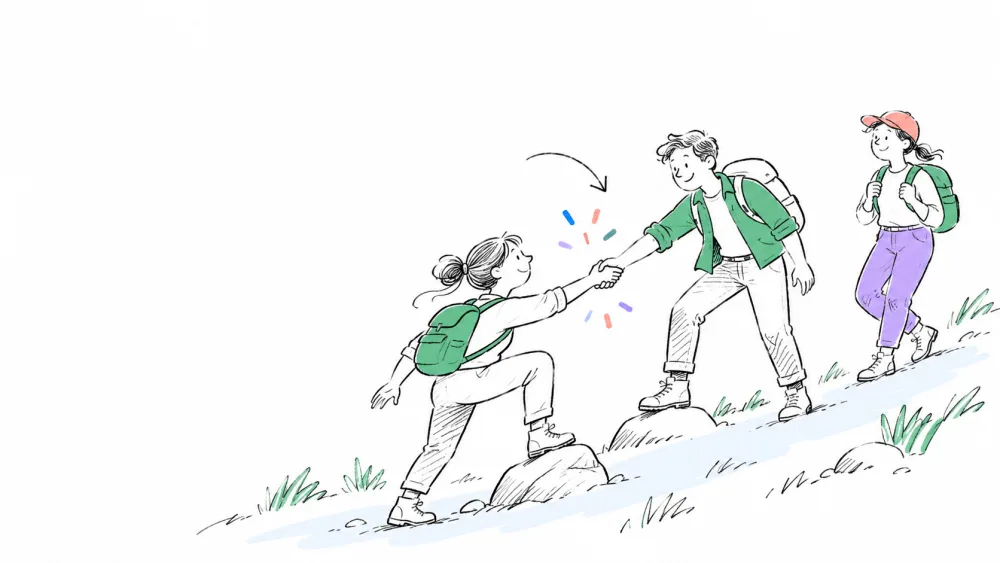
“What are my strengths, and what do I do with them?” One early trial on this question comes from Seligman, Steen, Park and Peterson (2005). Of 577 adults recruited online, 411 completed all five follow-ups. In one exercise, participants took a strengths inventory, got feedback on their top five strengths, then picked one of them and found a fresh way to use it each day for a week.
People who did this were happier and reported fewer depressive symptoms, and the gains held for six months. A lighter version, where people simply wrote down their top five and aimed to use them more that week, helped right after the week and then faded. Whether the gains lasted depended on how far people kept practicing by themselves once the week was over. The sample was well educated: just 4% had no schooling or vocational training past high school.
- List your likely top strengths
Use a questionnaire or pick the five that feel most like you, then compare the two lists.
- Check them with someone who knows you
Ask a friend which ones they see. Self-ratings and friends' ratings agree only modestly, so a second view helps.
- Use one in a new way every day for a week
Pick one top strength and apply it somewhere you normally would not, each day.
- Keep the practice and bring it to work
Benefits lasted for people who continued on their own. At work, look for tasks where your top strengths fit.
A meta-analysis by Schutte and Malouff (2019) pooled 29 effect sizes from 14 articles. Signature strength interventions raised happiness or positive affect (Hedges’ g = 0.32, nine studies), raised life satisfaction (g = 0.42, seven samples) and reduced depression (g = 0.21, seven studies). Use of signature strengths rose too (g = 0.55), though only two studies measured it. These are small to moderate effects from few studies. The depression finding is an average across research samples and says nothing about treatment.
At work, Harzer and Ruch (2013) surveyed 1,111 adults and found that the more people applied their signature strengths at work, the more positive experiences they reported there, such as job satisfaction, pleasure, engagement and meaning. This held whichever strengths people had. As a one-time survey, it shows a link and leaves the direction open.
If you doubt that a strength can grow, a growth mindset quiz shows how you think about ability. For a work-focused picture of your personal strengths, the profile below is a starting point.
Character strengths and weaknesses: underuse and overuse
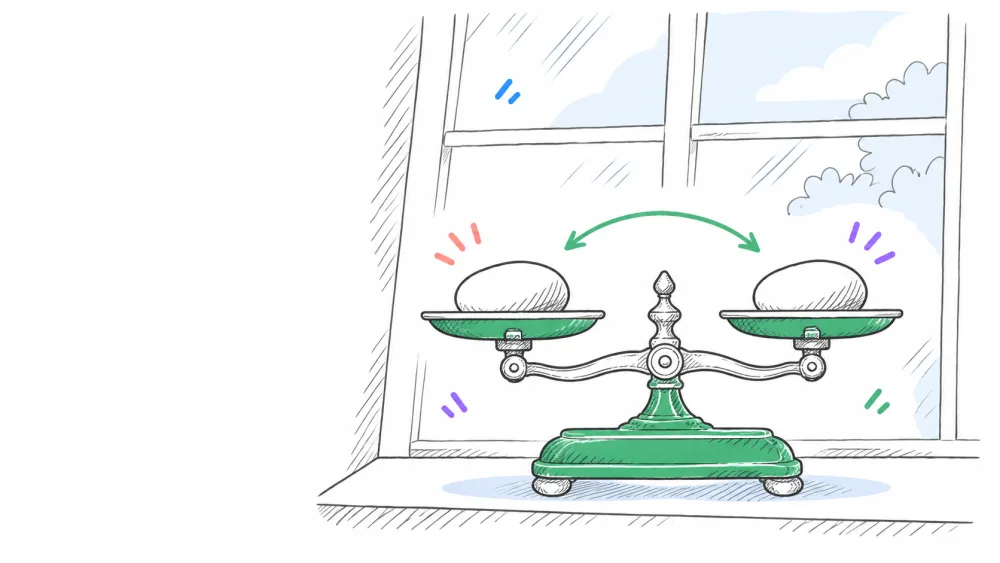
The VIA Institute offers one answer to the question of character strengths and weaknesses. It describes a golden mean, applying “the right combination of character strengths, to the right degree, in the right situation”. In this view a strength can cause trouble in two ways. Underuse means holding back a strength that a situation calls for, with a cost to you or to others. Overuse means leaning on a strength so hard that it starts to do harm.
A few examples make the idea concrete. Curiosity overused turns into nosiness, and underused it looks like boredom. Perseverance overused becomes stubbornness and trouble letting go, and underused it means giving up. Honesty pushed too far can come across as self-righteous or rude. Too little humility shows up as arrogance.
| Marker | Position |
|---|---|
| Giving up | closer to Underuse |
| Persistent | at the middle |
| Stubborn | closer to Overuse |
Source: VIA Institute on Character, Finding the Golden Mean
The golden mean comes from a one-page activity sheet for practitioners, based on work by Niemiec (2019). It is a way of thinking about your strengths, and no validated scale or score comes with it. For each of your top strengths, ask where you might be overdoing it, and for the strengths at the bottom of your list, ask where a little more would help.
Questions people ask
The answers below draw on the research cited above.
What are the 24 character strengths?
Wisdom: creativity, curiosity, judgment, love of learning and perspective. Courage: bravery, honesty, perseverance and zest. Humanity: kindness, love and social intelligence. Justice: fairness, leadership and teamwork. Temperance: forgiveness, humility, prudence and self-regulation. Transcendence: appreciation of beauty and excellence, gratitude, hope, humor and spirituality. This list of character strengths follows the VIA Classification.
What is the rarest character strength?
In data from 75 nations, the strength people rated lowest in themselves was self-regulation, followed by modesty, prudence, spirituality and zest. These rankings come from people who chose to take an online survey, a sample the researcher calls probably biased for many countries. They show how people describe themselves, which may differ from how often each strength appears in behavior.
Are character strengths the same as personality traits?
They overlap a lot. In a study of 152 people rated by themselves and by peers, character strengths and Big Five personality traits overlapped a great deal, but one set seldom duplicated the other. Interpersonal strengths such as teamwork were hard to separate from personality facets. The main difference is moral: strengths are defined as traits people value as good, while trait models describe without praise.
Can you develop a character strength?
You can learn to use one more. In a meta-analysis, signature strength interventions increased use of those strengths, though only two studies measured it, and they lifted happiness and life satisfaction by small to moderate amounts. In one trial, the benefits lasted when people kept practicing on their own. None of these studies tested whether the trait itself changes.
Sources
Show all 12 sources
- Peterson, C., Ruch, W., Beermann, U., Park, N., and Seligman, M. E. P. (2007). Strengths of character, orientations to happiness, and life satisfaction. The Journal of Positive Psychology, 2(3), 149-156 (Taylor & Francis). ppc.sas.upenn.edu
- McGrath, R. E. (2015). Character strengths in 75 nations: An update. The Journal of Positive Psychology, 10(1), 41-52 (Taylor & Francis). https.viacharacter.org
- McGrath, R. E. (2015). Integrating psychological and cultural perspectives on virtue: The hierarchical structure of character strengths. The Journal of Positive Psychology, 10(5), 407-424 (Taylor & Francis). viacharacter.org
- McGrath, R. E. (2019). Technical report: The VIA Assessment Suite for Adults: Development and initial evaluation (rev. ed.). VIA Institute on Character. https.viacharacter.org
- VIA Institute on Character (2026). VIA Inventory of Strengths-P (VIA-IS-P). VIA Institute on Character. viacharacter.org
- VIA Institute on Character (2026). 24 Character Strengths List. VIA Institute on Character. viacharacter.org
- VIA Institute on Character (2026). Character Strengths Test (VIA Survey page). VIA Institute on Character. viacharacter.org
- Seligman, M. E. P., Steen, T. A., Park, N., and Peterson, C. (2005). Positive psychology progress: Empirical validation of interventions. American Psychologist, 60(5), 410-421 (APA). psykologtidsskriftet.no
- Schutte, N. S., and Malouff, J. M. (2019). The impact of signature character strengths interventions: A meta-analysis. Journal of Happiness Studies, 20(4), 1179-1196 (Springer). ideas.repec.org
- Harzer, C., and Ruch, W. (2013). The application of signature character strengths and positive experiences at work. Journal of Happiness Studies, 14(3), 965-983 (Springer). ideas.repec.org
- Ruch, W., Vylobkova, A., and Heintz, S. (2023). Two of a kind or distant relatives? A multimethod investigation of personality and character. Journal of Individual Differences, 44(4), 263-270 (Hogrefe). doi.org/10.1027/1614-0001/a000400
- VIA Institute on Character (2019). Finding the Golden Mean (activity sheet). VIA Institute on Character. viacharacter.org