
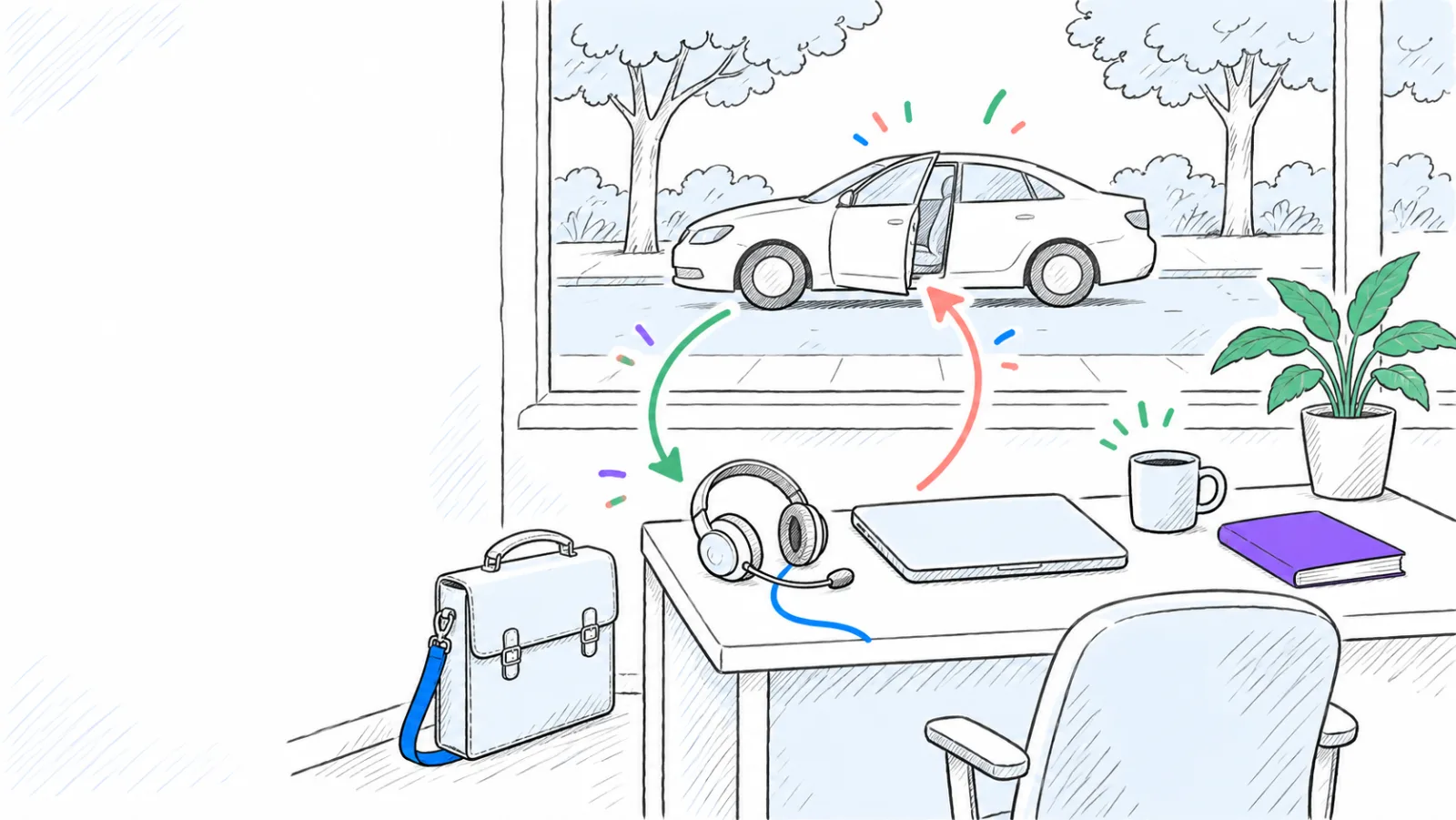
Inside vs outside sales comes down to where you sell and how you reach the buyer. In the words of the U.S. Bureau of Labor Statistics (BLS), inside sales representatives “work mostly in offices while making sales.” Outside sales representatives, for their part, “spend much of their time traveling to and visiting with current clients and prospective buyers”. Official data files both under one job. O*NET, the Labor Department’s occupation database, lists “Inside Salesperson” and “Outside Sales Representative” among the job titles of a single occupation. BLS puts median pay for wholesale and manufacturing sales representatives, the group these titles belong to, at $76,460 a year in May 2025.
Outside sales also goes by the name field sales, so inside sales vs field sales is the same comparison. Research on sales development uses “field sales” and “outside salesforce” for the same team, the one that takes qualified leads into in-depth conversations with buyers. This comparison of inside sales vs outside sales covers the daily work, pay, the federal overtime rule and what each role asks of the person in it.
Inside vs outside sales at a glance
Both kinds of rep do the same core job. BLS describes these reps as selling a wholesaler’s or manufacturer’s goods to companies, public agencies and other organizations, and adds that they reach clients through web tools such as chat, email and video calls. The outside vs inside sales split comes from where the selling happens and which stage of the sale each role owns.
| Inside sales | Outside sales | |
|---|---|---|
| Where the work happens | Mostly in an office | On the road, visiting current and new clients |
| How you reach buyers | Remotely, through digital channels | In person, plus phone, email and video |
| Focus in the research | Remote prospecting and sales development | Existing accounts and consultative selling |
| Time away from home | Little; the work is mostly office-based | Large territories can mean days or weeks away |
| Sales tech and analytics | Relied on more heavily | Relied on less |
| Federal outside sales exemption | Phone, mail and internet sales usually do not count | Can apply to selling at the customer site |
- Inside sales
- Where the work happens
- Mostly in an office
- How you reach buyers
- Remotely, through digital channels
- Focus in the research
- Remote prospecting and sales development
- Time away from home
- Little; the work is mostly office-based
- Sales tech and analytics
- Relied on more heavily
- Federal outside sales exemption
- Phone, mail and internet sales usually do not count
- Outside sales
- Where the work happens
- On the road, visiting current and new clients
- How you reach buyers
- In person, plus phone, email and video
- Focus in the research
- Existing accounts and consultative selling
- Time away from home
- Large territories can mean days or weeks away
- Sales tech and analytics
- Relied on less
- Federal outside sales exemption
- Can apply to selling at the customer site
The setting and travel rows rest on official data. BLS places inside reps mostly in offices and outside reps on the road, sometimes far from home when a territory is large, and notes that reps in general use chat, email and video. O*NET puts daily phone conversations at 100% for the occupation. The focus row, the tools row and the inside cell of the second row come from research. One study describes inside sales as remote selling and outside reps as experts working existing accounts; another finds inside reps rely more on sales technology and analytics. The exemption row summarizes the Labor Department’s fact sheet.
Much of the work itself is shared. O*NET’s highest-rated tasks for the occupation include answering questions about products, prices and credit terms, recommending products that fit a customer’s needs, quoting prices and contract terms, and supporting clients after a sale when problems come up. So the outside sales vs inside sales choice turns on setting and stage of the sale, with a shared set of tasks underneath.
What is inside sales?
BLS gives the shortest definition: inside sales representatives “work mostly in offices while making sales”. Research adds the how. Terho, Salonen and Yrjänen describe inside sales as “remote engagement of prospects in highly adaptive exchanges with the help of digital technologies”. An inside sales representative, in other words, sells at a distance, through digital channels.
A 2020 qualitative study by Sleep, Dixon, DeCarlo and Lam drew on two separate samples of sales leaders and working salespeople. It found that inside and outside salespeople differ in their job demands and resources, and that inside salespeople lean on sales technology and analytics more than their outside colleagues do. The authors point out that business-to-business firms are putting large sums into inside sales teams while academic research trails behind. They also report that existing control systems fall short: the resources and rewards they give inside reps have not kept up with the rising strategic value and demands of the role.
Sales development is one form of inside sales. Terho and colleagues describe it as work done by “back-end sales representatives” who use digital sales technologies to research leads, engage them and pass them on, with the goal of “generating qualified leads for the outside sales force”. Their study rests on interviews with 13 people from 8 firms. The authors name subscription software (SaaS) companies as the usual home of this function and also interviewed people at other kinds of firms to see how the process shifts with context. Read it as a close look at those firms, with no measure of how widespread the practice is.
| Step | What happens |
|---|---|
| Lead research | Inside reps study prospects with digital tools |
| Engagement | Remote contact through digital channels |
| Handover | Qualified leads pass to the outside team |
| Field conversation | Outside reps take the in-depth meeting |
Source: Terho, Salonen and Yrjänen, Journal of Business & Industrial Marketing, 2022
The first three steps are the processes the study names (lead research, engagement and handover), and the field meeting is the goal they prepare for. The details shift with the context: whether the team reaches out or answers inbound interest, and whether it targets new prospects or named accounts.
What is outside sales?
Outside sales is selling face to face. BLS describes the outside sales representative as someone whose days go largely to travel and to visits with existing customers and prospects. Territory size sets how much a rep travels. A region can stretch across several states, so reps “may be away from home for several days or weeks at a time”, while a compact region means less time on the road, BLS adds.
Research casts the role as the expert end of the sales team. Terho and colleagues picture “outside expert salespersons focused on engaging existing accounts through consultative and value-based selling”. In firms with a sales development team, field sales is where qualified leads go for the in-depth conversation.
BLS lists physical stamina among the important qualities for the occupation as a whole, since reps often stand for long stretches and may haul heavy product samples. It also lists self-confidence, because a sales presentation has to persuade.
O*NET’s work context data shows what the travel looks like across the occupation. It reports that 61% work in an enclosed vehicle or operate enclosed equipment every day, 39% work outdoors in all weather every day and 71% have face-to-face discussions every day. A typical week runs longer than 40 hours for 66%, and BLS notes that many reps work more than 40 hours a week. These figures cover the whole occupation, inside titles included, so they describe the group as a whole and say little about any one field job.
Are inside and outside sales becoming the same job?
A common question is whether video calls have erased the line between the two roles. A 2020 editorial in Industrial Marketing Management, written during the COVID-19 crisis, observed that “personal business meetings with customers have been replaced by video conferences” and that firms were putting digital sales channels first. The same authors noted that video conferences are “typically seen as low-end, low quality interaction modes” and asked what the change would do to customer relationships and to the quality of sales meetings. An editorial records observations from that moment, with no data behind them.
Research on how firms organize sales points to blending. Terho and colleagues write that hybrid inside-outside structures “have become a central way of organizing contemporary B2B sales” and that “firms are increasingly emphasizing the inside sales function”. Sleep and colleagues found four distinct inside-outside configurations, each with its own benefits and costs for the company, the customer and the sales force. As Terho’s team summarizes them, they run from inside reps who support the field team, through mixed teams and separate inside units, to sales development.
Blending inside a firm still leaves two kinds of work, as Sleep’s findings on job demands show, and BLS still describes the two roles separately. Across the occupation, daily phone use stands at 100% and daily email at 80%, so remote tools are part of every rep’s day. What separates inside from outside work is how much of it happens in a car, at client sites and away from home. For a job seeker, then, the useful question is the share of travel and in-person meetings in a given role, and the job ad or the interview can answer it.
Inside vs outside sales salary
Neither BLS nor O*NET publishes a separate figure for inside sales pay or for an outside sales salary. O*NET places both titles in a single occupation, and BLS reports pay by the type of product sold, with no split by inside and outside role. Any number you see for an outside sales representative salary therefore comes from outside the official statistics, so ask how it was collected before you rely on it.
In May 2025, median annual pay for all wholesale and manufacturing sales reps was $76,460. For reps selling products other than technical and scientific ones, the median was $72,080, with the lowest 10% earning less than $39,090 and the highest 10% more than $137,550. For technical and scientific products, the median was $104,920, with the lowest 10% under $52,600 and the highest 10% over $200,440.
The chart splits pay by product type, the split BLS reports for this occupation. The two medians are $32,840 apart, a gap we computed from the two BLS figures. Entry requirements differ too. Reps who sell scientific or technical products usually need a bachelor’s degree or more, while for other products a high school diploma is usually enough to get started.
Most employers combine a base salary with either commission or bonuses, and commission is usually figured as a share of sales. Ask how much of the target pay depends on commission before you compare two offers. On jobs, BLS projects “little or no change” in employment for the occupation from 2025 to 2035, with about 123,400 openings a year.
How the federal overtime rule treats outside sales
Federal overtime law gives “outside sales” a defined meaning. Under the Fair Labor Standards Act, the outside sales exemption has two parts. The employee’s “primary duty must be making sales,” or “obtaining orders or contracts for services or for the use of facilities” that the client or customer pays for. The employee must also be “customarily and regularly engaged away from the employer’s place or places of business”. The fact sheet adds that “the salary requirements of the regulation do not apply to the outside sales exemption”.
Two details bear on inside work. “Outside sales does not include sales made by mail, telephone or the Internet” unless that contact is “used merely as an adjunct to personal calls”. And “any fixed site, whether home or office, used by a salesperson as a headquarters,” in the fact sheet’s words, “is considered one of the employer’s places of business”. A short trade show of one or two weeks, with real selling at the stand, falls outside the employer’s place of business under the regulation.
On those terms, a rep who sells by phone from a home office would not meet the away-from-the-office part of the test. Whether that rep is owed overtime depends on other rules this guide does not cover. The fact sheet itself states that its contents “do not have the force and effect of law”.
What each role asks of you
O*NET describes the occupation, both titles together, with a profile of interests and work styles. Interests peak at Enterprising (85 out of 100) and Conventional (65). The work styles with the highest impact ratings are perseverance (100), social orientation (94), self-confidence (80) and achievement orientation (77). These numbers rate the occupation. They describe what the job draws on, they apply to inside and outside titles alike, and your own score on a test is a different kind of number. To set your own habits beside that list, the working styles assessment is one place to start.
Research on performance adds a second view. In a 1991 meta-analysis, Barrick and Mount found that conscientiousness related to performance in every occupational group they studied, and that extraversion predicted performance for managers and for sales, two kinds of work built on dealing with people. For sales, the estimated true correlations were ρ = .23 for conscientiousness, .15 for extraversion and .00 for agreeableness. Our post on personality differences between sales and software engineering goes further into that evidence.
Verbeke, Dietz and Verwaal later combined studies from 1982 to 2008 and found five groups of factors with significant links to sales performance. Knowledge about selling came first (β = .28), then adaptiveness (β = .27), role ambiguity (β = -.25), cognitive aptitude (β = .23) and work engagement (β = .23).
Role ambiguity is the one negative link in the set: the less clear a rep’s role, the lower the performance. The authors also report that the size of these links depends on the measurement method, the research setting and the type of sales job.
Read these coefficients as a psychometrician would. Values between .15 and .28 describe groups of people, and even the largest leaves most of the variation in performance unexplained. Both papers report that their size shifts with the kind of job and with how the studies measured things. Neither meta-analysis compares inside and outside reps directly, so this guide makes no claim that a trait suits one role better.
What does differ by role, on the evidence above, is the setting. Field work brings travel and time away from home, and inside work leans harder on the sales technology and analytics noted earlier. If your question is “would I be good at sales,” the sales rep career assessment asks about your attributes, interests and motivations and relates them to sales roles. The salesperson career assessment, in its own words, “scores your interests and personality against what the job demands”.
How to choose between inside and outside sales
Which is better, inside or outside sales, depends on how much travel and face-to-face selling you want in your week. If you are asking “is sales right for me?” and which kind, the details of a specific job hold the answer. Titles alone say little, since O*NET files both under one occupation. Take these questions to the job ad, the interview and the offer.
Before you accept an inside or outside sales offer
- How much of the job is travel, and how many nights away a month?
- How large is the territory?
- Is the product technical enough to need a degree?
- How is pay split between base salary, commission and bonus?
- Is the role classed as exempt from overtime, and on what basis?
- Which sales tools and dashboards will you work in each day?
- How do people move between the inside and outside teams here?
The last question matters because many firms run the two teams together, with hybrid structures now central to B2B sales. BLS also notes that “frequently, promotion takes the form of an assignment to a larger account or territory”. Ask how people at that company have moved between the inside and outside teams, and what a larger territory would mean for your travel.
If owning client accounts appeals to you, try the account executive career assessment. Neighboring roles sit under sales, marketing and communications careers, and the full list of career assessments by field covers the rest. For a wider view of how personality relates to career choice, read our guide to careers by personality type.
Sources
Show all 9 sources
- Bureau of Labor Statistics (2026). Wholesale and Manufacturing Sales Representatives, Occupational Outlook Handbook. U.S. Bureau of Labor Statistics. bls.gov
- National Center for O*NET Development (2026). Sales Representatives, Wholesale and Manufacturing, Except Technical and Scientific Products (41-4012.00), Details report. O*NET OnLine, U.S. Department of Labor. onetonline.org
- Terho, H., Salonen, A., & Yrjänen, M. (2022). Toward a contextualized understanding of inside sales: the role of sales development in effective lead funnel management. Journal of Business & Industrial Marketing. doi.org/10.1108/JBIM-12-2021-0596
- Sleep, S., Dixon, A. L., DeCarlo, T., & Lam, S. K. (2020). The business-to-business inside sales force: roles, configurations and research agenda. European Journal of Marketing, 54(5), 1025-1060. doi.org/10.1108/EJM-06-2018-0416
- Wage and Hour Division (2024). Fact Sheet #17F: Exemption for Outside Sales Employees Under the Fair Labor Standards Act (FLSA). U.S. Department of Labor. dol.gov
- Pedersen, C. L., Ritter, T., & Di Benedetto, C. A. (2020). Managing through a crisis: Managerial implications for business-to-business firms. Industrial Marketing Management, 88, 314-322. pmc.ncbi.nlm.nih.gov
- U.S. Department of Labor (2026). 29 CFR 541.502, Away from employer’s place of business. Legal Information Institute, Cornell Law School. law.cornell.edu
- Barrick, M. R., & Mount, M. K. (1991). The Big Five personality dimensions and job performance: a meta-analysis. Personnel Psychology, 44(1), 1-26. doi.org/10.1111/j.1744-6570.1991.tb00688.x
- Verbeke, W., Dietz, B., & Verwaal, E. (2011). Drivers of sales performance: a contemporary meta-analysis. Have salespeople become knowledge brokers? Journal of the Academy of Marketing Science, 39, 407-428. doi.org/10.1007/s11747-010-0211-8